Many people in the United States grow up hearing that education is important because it leads to good grades, a college degree, and a better job. That idea is partly true, but it is also incomplete. When we see education only as a way to pass exams or get a diploma, a lot of people end up feeling frustrated, pressured, or even like failures if they do not follow the “traditional” path.
The real problem is this: we often limit education to what happens in a classroom. In real life, education is much bigger. It affects how we think, how we handle problems, how we treat other people, and how we navigate daily life—from reading a rental agreement to understanding our health information.
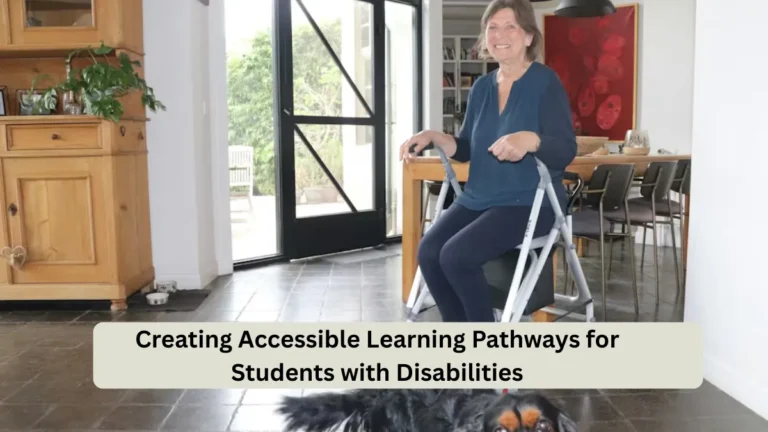
 Creating Accessible Learning Pathways for Students with Disabilities
This article looks at why education is important beyond academic success, what happens when we ignore that broader value, and practical ways anyone in the US—students, workers, parents, and seniors—can keep learning in simple, realistic ways.
The Problem: Seeing Education Only as School
Many people in the US feel discouraged about education for a few common reasons:
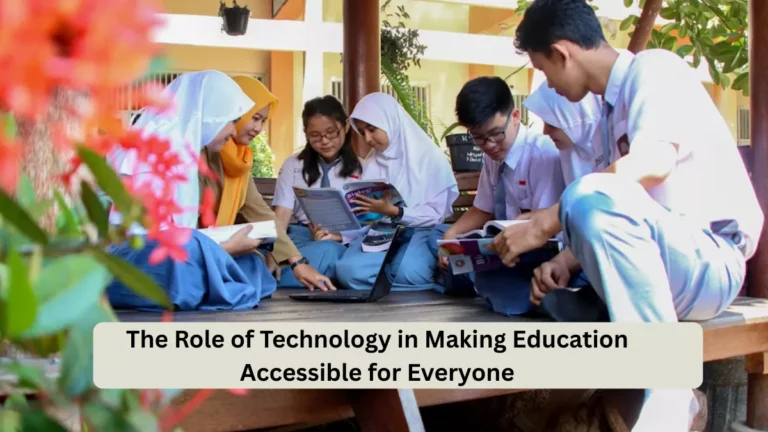
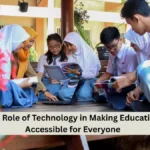 The Role of Technology in Making Education Accessible for Everyone
- They struggled in school and now believe they are “not smart.”
- They did not go to college and worry they missed their chance.
- They are busy with work, kids, or caregiving and think learning is “over.”
- They believe education is only useful if it leads to a higher-paying job.
This narrow view creates several problems:
- Adults may avoid learning new skills at work because they are afraid of failing.
- Seniors might feel left behind by technology and avoid using helpful tools.
- Parents may feel unqualified to support their kids’ homework.
- Teenagers may feel that grades define their entire future.
When education is tied only to academic success, people who do not fit that mold can feel stuck, ashamed, or unmotivated to grow. That is a loss not only for them, but for their families, workplaces, and communities.
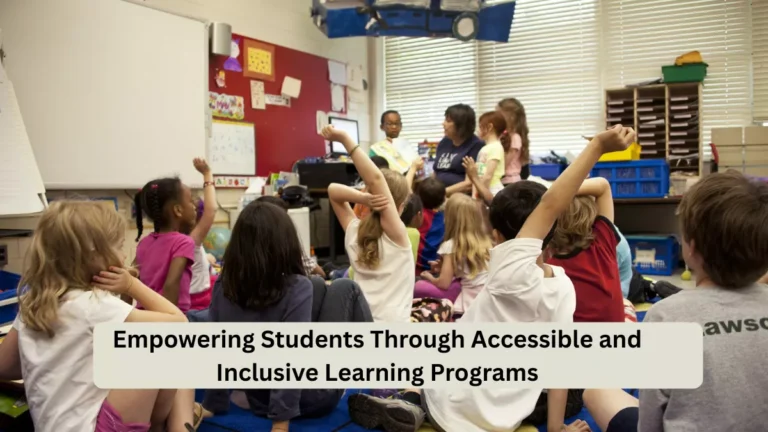
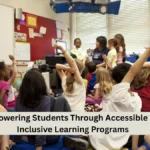 Empowering Students Through Accessible and Inclusive Learning Programs
Why This Happens: A Limited View of Education
There are a few reasons this mindset is so common in the US.
School-focused culture
From an early age, children are judged heavily on report cards, test scores, and GPA. Teachers, parents, and even kids themselves often use grades as the main measure of intelligence or effort. Over time, many people start to believe: “If I am not good at tests, I am not good at learning.”
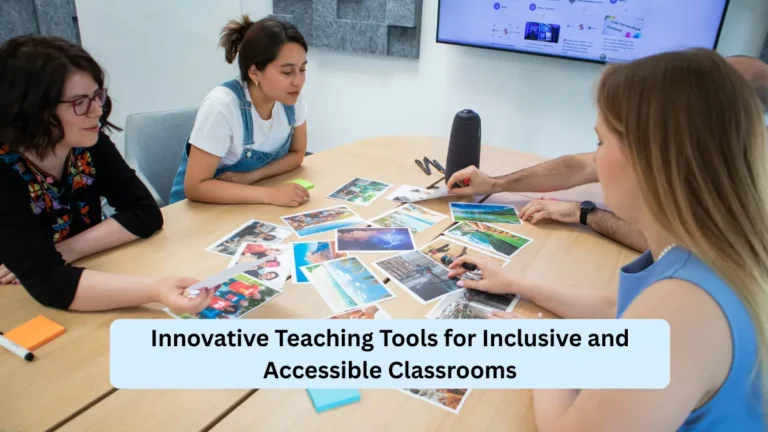
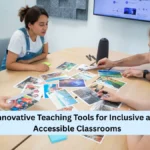 Innovative Teaching Tools for Inclusive and Accessible Classrooms
Pressure around college and careers
In many communities, a four-year degree is seen as the main path to success. If someone chooses community college, trade school, military service, or jumps straight into work, they may feel less accomplished—at least at first. This pressure can make education feel like a competition instead of a lifelong process.
Confusing learning with perfection
A lot of us were never taught how normal it is to struggle while learning something new. Instead, we see mistakes as proof that we are “bad” at a subject. So, we stop trying. This is especially common with subjects like math, writing, or technology.
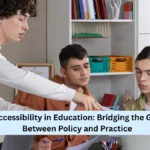 Accessibility in Education: Bridging the Gap Between Policy and Practice
Overlooking everyday learning
Much of the most important learning happens outside school: raising kids, managing a household, coping with health issues, volunteering, fixing things at home, or handling conflict. Because these do not come with diplomas, people often do not see them as “education,” even though they clearly are.
Why Education Is Important Beyond Academics
When you look beyond grades and degrees, education touches almost every part of life. Here are several key areas where it matters deeply.
1. Education sharpens everyday decision-making
Education, in the broad sense, helps you:
- Compare information instead of believing the first thing you see.
- Ask better questions at a doctor’s office or when signing a lease.
- Understand basic statistics, such as risk, probability, and averages.
- Read labels, instructions, and agreements with more confidence.
For example, a parent in Ohio comparing two after-school programs can use basic research and reasoning skills to check reviews, ask about safety policies, and weigh costs versus benefits. That process is education in action, even if it never appears on a transcript.
2. Education builds confidence and independence
When you learn how something works—whether it is an app, a washing machine, or a bus route—you depend less on others to “do it for you.” That independence builds confidence.
- A senior who learns how to use video calling can connect more easily with family.
- A worker who learns how to use spreadsheet software can handle more tasks at the office.
- A teenager who learns basic car maintenance can feel safer on the road.
This kind of learning does not require straight A’s. It requires curiosity and a willingness to try, ask, and practice.
3. Education improves communication and relationships
Good communication is learned, not inherited. Education—formal or informal—helps you:
- Express your thoughts more clearly in conversation and writing.
- Listen actively and ask follow-up questions.
- Understand different perspectives without instantly judging them.
- Solve conflicts more calmly.
A couple in Texas who learns simple communication techniques, like using “I” statements and taking turns speaking, is using education to strengthen their relationship. None of that shows up on a report card, but it can change daily life.
4. Education helps us adapt to change
Technology, workplaces, and communities change rapidly in the US. People who keep learning tend to adapt more easily:
- When workplaces switch to new software, lifelong learners adjust faster.
- When banking moves online, those who learn basic digital skills can manage their money more easily.
- When neighborhoods change culturally, learning about different backgrounds can reduce tension and increase respect.
The ability to learn, unlearn, and relearn is often more valuable than any single skill.
5. Education deepens understanding of yourself
Education is not just about external information. It also helps you understand:
- What motivates you.
- How you handle stress.
- Which environments you thrive in.
- What your strengths and limitations are.
Someone might learn through experience that they focus better with hands-on work than with lectures. Another person might discover that they handle pressure better with clear routines. This kind of self-knowledge often comes from reflection, reading, therapy, coaching, or honest conversations—all forms of education.
Step-by-Step: How to See Education Differently in Your Own Life
You do not need to go back to school or enroll in an expensive program to benefit from education. Here is a step-by-step way to shift how you use learning in your everyday life.
Step 1: Redefine what “education” means for you
Take a few minutes and ask yourself:
- What skills have I learned outside school that I am proud of?
- Who taught me those skills—family, coworkers, friends, mentors, myself?
- When have I solved a problem by learning something new?
Write down a few examples. It might be teaching yourself how to cook a new dish, learning to change a tire, or figuring out how to video chat with grandkids. Seeing these as educational wins can change how you view your own abilities.
Step 2: Identify one area of life that feels harder than it needs to
Look at your day-to-day life in the US context. Common areas include:
- Managing time between work, school, and family.
- Understanding digital tools, apps, or online forms.
- Communicating clearly with coworkers or family members.
- Navigating public services like the DMV, libraries, or community centers.
Choose just one area where you regularly feel confused, stressed, or dependent on others. That is your starting point.
Step 3: Turn that problem into a learning goal
Now, reshape the problem into a simple learning goal:
- “I want to learn how to manage my time better during the week.”
- “I want to feel more comfortable using my smartphone.”
- “I want to learn how to speak up more confidently at meetings.”
Make sure the goal is specific, but not too big. You are not trying to become an expert overnight—just a bit more capable than you were yesterday.
Step 4: Break the goal into small, realistic steps
For most people in the US with busy schedules, small steps work best. Here are a few examples.
If your goal is to manage time better:
- Step 1: Spend one week writing down how you actually spend your time.
- Step 2: Circle any patterns (late nights, social media, last-minute rushing).
- Step 3: Use a simple paper planner or a basic calendar app to map out the next week.
- Step 4: Try planning just two things per day: one priority and one optional task.
If your goal is to use your smartphone more confidently:
- Step 1: Ask a trusted friend, relative, or local librarian to show you three basic features you want to use (for example, email, text, and photos).
- Step 2: Practice those features daily for a week.
- Step 3: Write down any questions or frustrations you have.
- Step 4: Look for simple guides or classes at local libraries, community centers, or senior centers.
If your goal is to speak up more at work:
- Step 1: Before each meeting, write down one idea or question you could share.
- Step 2: Decide in advance when you will speak—early in the meeting is usually easier.
- Step 3: After the meeting, jot down what went well and what felt uncomfortable.
- Step 4: Keep practicing in low-stakes situations, like team check-ins or small groups.
Each of these steps is an educational process. You notice a problem, gather information, try something, and reflect on the outcome.
Step 5: Use everyday resources around you
In many parts of the US, there are more learning resources than people realize. Depending on where you live, you might find:
- Public libraries offering free classes on digital skills, language, or job readiness.
- Community colleges with short evening courses or workshops.
- Community centers with classes in fitness, arts, or life skills.
- Faith-based organizations hosting parenting groups or support circles.
- Workplace training programs you can join voluntarily.
If you feel nervous about walking into a class, remember: most adults there feel the same way. They are not there to judge; they are there to learn.
Step 6: Reflect regularly on what you are learning
Every week or two, ask yourself:
- What did I learn this week, even in small ways?
- How did that learning help me, even a little?
- What is one small thing I want to learn next?
You can do this alone, with a partner, or even with your kids as a family habit. This keeps you aware that learning is ongoing, not limited to a school building.
Helpful Tips and Common Mistakes to Avoid
Tip 1: Start smaller than you think you should
Many people begin with huge goals and then burn out. Choosing something small and achievable is more sustainable. For example, reading five pages of a book each night is more realistic than aiming for an hour of study every day.
Tip 2: Allow yourself to be a beginner
Adults often feel embarrassed when they do not understand something. But every expert was once a beginner. It is okay to say, “Can you show me that again?” or “I do not understand yet.” That is not a weakness; it is a learning skill.
Tip 3: Learn from people, not just from screens
Online resources are useful, but in-person learning has its own benefits. You can ask follow-up questions, see demonstrations, and hear other people’s experiences. A conversation with a neighbor who knows how to budget, cook, or repair something can be as valuable as a formal class.
Tip 4: Notice progress, not perfection
You might still make mistakes even after learning something new. Focus on what has improved:
- You feel a bit less nervous making a phone call.
- You understand a few more settings on your phone.
- You handle a disagreement more calmly than before.
These small wins build over time.
Common mistake 1: Comparing your path to others
In the US, it is easy to compare your education journey to someone else’s—your coworker’s degree, your neighbor’s job, your friend’s perfect-looking social media profile. Try to measure your progress against your own starting point, not someone else’s story.
Common mistake 2: Thinking “I missed my chance”
People return to learning at every age. Workers in their 40s switch careers. Grandparents learn new languages to connect with family. People in their 60s join computer classes for the first time. Your age, background, or past school experience does not disqualify you from learning now.
FAQ’s
Is education still important if I did not do well in school?
Yes. School performance is only one piece of your educational story. Many people who struggled with tests or traditional classes are excellent at hands-on learning, problem-solving, or people skills. Education includes all the ways you learn and grow, not just your grades.
I am retired. Does education still matter for me?
Very much so. Learning can help keep your mind active, your social life more connected, and your daily life more independent. Many seniors enjoy learning new hobbies, improving digital skills, joining discussion groups, or exploring topics they never had time for before retirement.
I feel embarrassed asking for help. What can I do?
Asking someone you trust—family, friend, coworker—for help privately.
✨ You May Also Like ✨