Education is often described as the great equalizer, yet access to quality learning remains uneven across the globe. Inclusive education policies are pivotal because they aim to remove barriers that prevent every student, regardless of their abilities, background, or socio-economic status, from learning effectively. These policies recognize that diversity in classrooms—whether due to physical disabilities, learning differences, cultural backgrounds, or economic disparities—requires an adaptive approach to teaching and school management.
Understanding inclusive education is critical for educators, policymakers, parents, and students alike, as it promotes equality, social cohesion, and improved learning outcomes. This article explores the essence of inclusive education policies, their benefits, practical implementations, and the challenges that must be overcome to achieve a truly equitable learning environment.
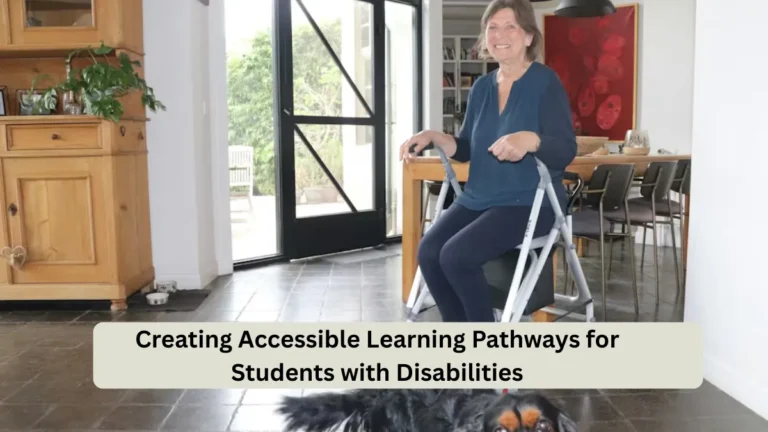
 Creating Accessible Learning Pathways for Students with Disabilities
Understanding Inclusive Education
Inclusive education goes beyond simply placing students with diverse needs in mainstream classrooms. It is a philosophy and approach that ensures all learners feel valued, supported, and able to participate meaningfully. At its core, inclusive education emphasizes removing physical, curricular, and attitudinal barriers that can hinder student engagement. It involves creating flexible learning environments, differentiated instruction, and access to appropriate support services.
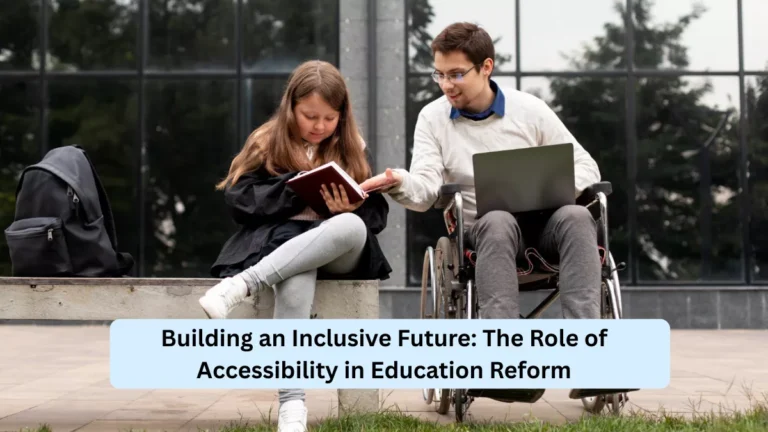
For example, students with visual impairments may require assistive technology, while those with learning disabilities might benefit from tailored instructional strategies. Inclusive education acknowledges that learning is not one-size-fits-all and champions adaptive methods that foster participation, engagement, and academic achievement for everyone.
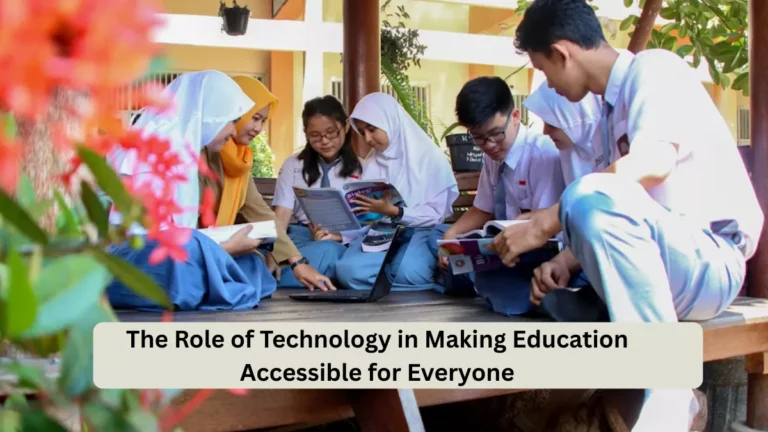
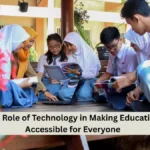 The Role of Technology in Making Education Accessible for Everyone
The Importance of Inclusive Education Policies
Implementing inclusive education policies is crucial for both social and academic reasons. Socially, inclusive classrooms promote understanding, empathy, and cooperation among students from diverse backgrounds. This interaction cultivates tolerance, reduces prejudice, and prepares students to thrive in diverse workplaces and communities. Academically, research has shown that inclusive classrooms can enhance learning outcomes not only for students with special needs but also for their peers.
Exposure to collaborative and differentiated learning methods encourages critical thinking, creativity, and problem-solving skills. Additionally, inclusive education policies demonstrate a society’s commitment to human rights and equality, reinforcing the principle that every child deserves access to quality education regardless of their circumstances.
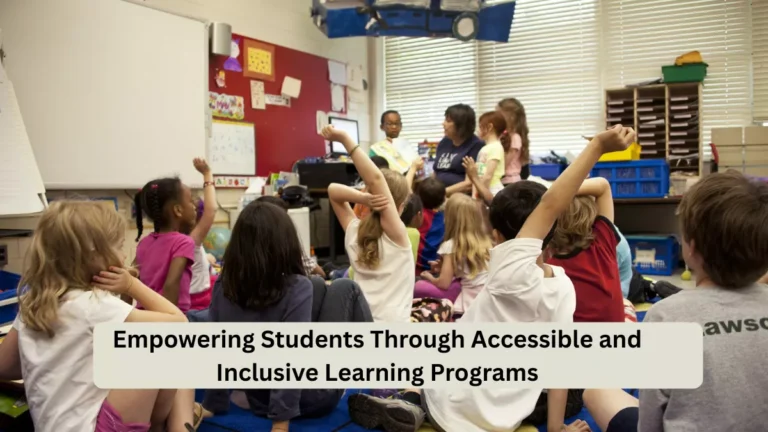
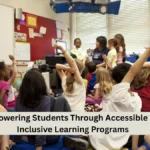 Empowering Students Through Accessible and Inclusive Learning Programs
Key Elements of Effective Inclusive Education Policies
Effective inclusive education policies are comprehensive and well-structured. They typically address curriculum design, teacher training, classroom accessibility, assessment practices, and support services. Curriculum design should be flexible, allowing educators to adapt lessons to diverse learning needs.
Teacher training is critical, as educators must be equipped with skills in differentiated instruction, classroom management, and understanding of diverse learning challenges. Classroom accessibility encompasses physical infrastructure, technology, and learning materials that accommodate all students. Assessment practices need to focus on evaluating learning progress rather than comparing students against a uniform standard. Finally, support services such as counseling, speech therapy, and resource centers play a vital role in creating an environment conducive to learning for all students.
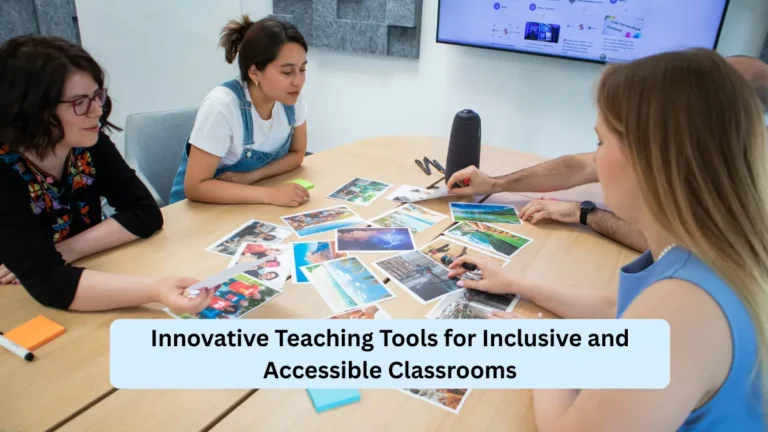
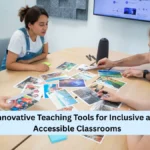 Innovative Teaching Tools for Inclusive and Accessible Classrooms
Global Examples of Inclusive Education Policies
Several countries have implemented inclusive education policies with measurable success. In Finland, for example, inclusive education is integrated into the national curriculum, emphasizing early intervention and individualized support. Teachers receive extensive professional development, and classrooms are designed to be accessible for all learners. Canada follows a model that combines federal guidelines with provincial flexibility, ensuring students with diverse needs have access to specialized support while participating in mainstream classrooms.
Similarly, India’s Right to Education Act and subsequent inclusive policies strive to ensure that children with disabilities are not excluded from public schooling. These examples highlight that while approaches may vary, the commitment to equity, accessibility, and quality education remains central to all successful inclusive education frameworks.
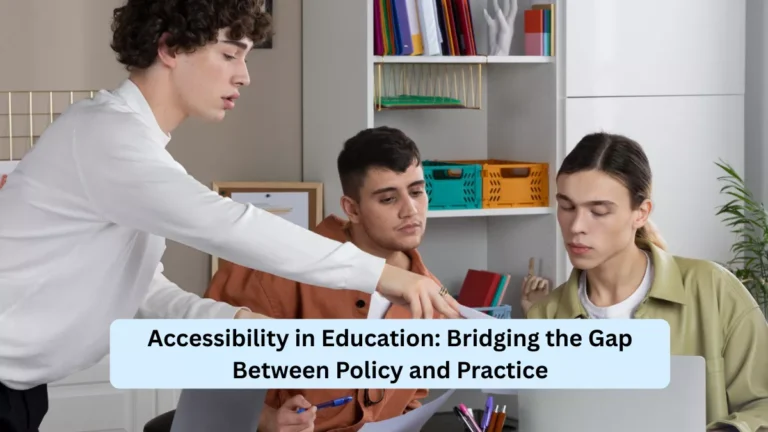
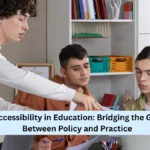 Accessibility in Education: Bridging the Gap Between Policy and Practice
Challenges in Implementing Inclusive Education Policies
Despite the clear benefits, implementing inclusive education policies presents several challenges. One major obstacle is inadequate funding, which limits the availability of resources, trained personnel, and accessible infrastructure. Teachers may feel unprepared to handle diverse classrooms without sufficient training and support.
Societal attitudes and cultural biases can also hinder inclusion, as some communities may perceive students with disabilities or learning differences as less capable. Additionally, rigid curricula and standardized testing systems often fail to accommodate diverse learning needs. Addressing these challenges requires not only policy reforms but also a shift in mindset, adequate allocation of resources, continuous teacher training, and active collaboration among stakeholders.
Practical Strategies for Promoting Inclusion in Schools
Promoting inclusion in schools requires a combination of policy support, teacher engagement, and community involvement. Teachers can employ differentiated instruction techniques to adapt lessons according to students’ abilities and learning styles. Schools can invest in assistive technologies such as screen readers, hearing aids, and adaptive learning software to enhance accessibility.
Peer mentoring and cooperative learning strategies help foster social integration and empathy among students. Policy frameworks should mandate regular assessments of inclusive practices and ensure accountability at the institutional level. Additionally, parental engagement is crucial, as collaboration between educators and families reinforces consistent support for students’ learning needs both at home and in school.
The Role of Technology in Inclusive Education
Technology plays a transformative role in facilitating inclusive education. Digital learning platforms, adaptive software, and assistive devices enable students with varying needs to access education effectively. For instance, speech-to-text applications help students with writing difficulties, while audiobooks and screen readers support learners with visual impairments.
Virtual classrooms and online resources can accommodate students who cannot attend school due to medical conditions or geographical constraints. Moreover, technology allows teachers to track progress individually, personalize learning, and provide instant feedback. When integrated thoughtfully, technology not only enhances learning accessibility but also empowers students to develop digital literacy skills essential for the modern world.
Policy Recommendations for Effective Inclusion
To ensure that inclusive education policies achieve their intended goals, governments and institutions should focus on comprehensive planning and monitoring. Adequate funding must be allocated for infrastructure, resources, and teacher training. Policies should be developed in consultation with educators, parents, students, and disability advocacy groups to address real-world challenges. Teacher training programs should emphasize inclusive pedagogical techniques, classroom management, and cultural competence.
Additionally, evaluation mechanisms should be implemented to assess policy effectiveness regularly, making adjustments where necessary. Collaboration among schools, communities, and policymakers is essential to create an inclusive educational ecosystem where every student has the opportunity to thrive.
Benefits of Inclusive Education for Society
Inclusive education extends benefits far beyond the classroom. By ensuring equal learning opportunities, societies foster a sense of belonging, civic responsibility, and social cohesion. Students exposed to inclusive environments develop empathy, communication skills, and adaptability, qualities that are valuable in workplaces and communities.
Economically, inclusive education contributes to a more skilled and diverse workforce, reducing inequalities and promoting innovation. Furthermore, it strengthens human rights frameworks by demonstrating societal commitment to fairness and equity. In essence, inclusive education not only empowers individual learners but also drives social and economic progress at a broader level.
Conclusion
Inclusive education policies are essential for creating equitable learning environments where every student can succeed. By removing barriers, providing tailored support, and fostering inclusive mindsets, these policies enable students of all abilities and backgrounds to participate meaningfully in education.
While challenges such as funding, societal attitudes, and teacher preparedness exist, proactive strategies, robust policy frameworks, and technology integration can overcome them. Ensuring inclusion in education is not only a moral imperative but also a practical investment in the future of society, promoting equality, social cohesion, and economic development.
FAQs
What is inclusive education?
Inclusive education ensures all students, regardless of abilities or background, have access to meaningful learning opportunities.
Why are inclusive education policies important?
These policies promote equality, improve learning outcomes, and foster social understanding and empathy among students.
How can schools implement inclusive education effectively?
Schools can provide adaptive learning, teacher training, assistive technologies, and supportive classroom strategies.
What role does technology play in inclusive education?
Technology enhances accessibility, enables personalized learning, and provides tools like screen readers, audiobooks, and adaptive software.
What challenges do inclusive education policies face?
Challenges include funding gaps, societal biases, rigid curricula, limited teacher training, and inadequate resources.
✨ You May Also Like ✨