

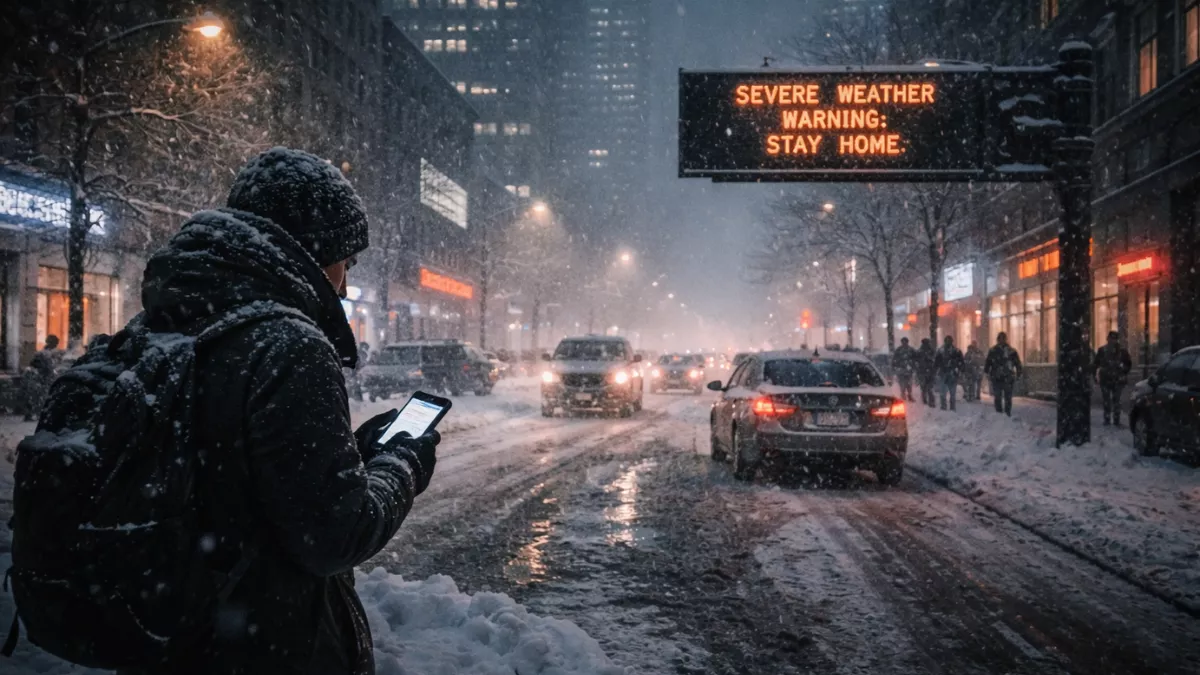
Heavy snow expected tonight has placed large parts of the U.S. on alert, with weather agencies forecasting dangerous travel conditions, reduced visibility, and rapidly dropping temperatures. State and local authorities are urging residents to avoid unnecessary travel, especially during overnight hours when road treatment becomes more difficult.
Despite these warnings, many businesses are signaling plans to maintain normal operations, creating tension between public safety concerns and economic pressures. For commuters, the conflicting messages are causing confusion about whether to report to work or remain home.


Emergency officials stress that the first wave of snowfall often creates the most hazardous driving conditions, catching motorists off guard. As heavy snow expected tonight dominates forecasts, preparation and informed decision-making are critical for households, workers, and employers alike.
Authorities issue strong travel warnings
Officials across multiple states are emphasizing safety as their top priority. Transportation departments warn that snowfall rates could overwhelm plows during peak accumulation periods, leading to slick highways and untreated secondary roads. Law enforcement agencies are advising drivers to stay off the roads unless travel is absolutely necessary.

This guidance is especially aimed at overnight drivers and early morning commuters. When heavy snow expected tonight coincides with freezing temperatures, black ice becomes a major concern.
Authorities also remind residents that emergency response times increase during storms, meaning help may be delayed. Staying home reduces accidents and allows crews to focus on essential routes. These warnings are not issued lightly and reflect lessons learned from previous winter storms that escalated quickly.

Businesses face pressure to remain open
While officials urge caution, many businesses are weighing the cost of closures against safety risks. Retailers, warehouses, and service providers often feel pressure to operate as usual, particularly during high-demand periods. Employers argue that modern vehicles and remote monitoring systems make limited travel manageable.
However, worker advocacy groups stress that no job is worth risking lives when heavy snow expected tonight creates unpredictable conditions. Some companies are offering flexible schedules or remote options, while others continue to expect on-site attendance.

This divide highlights ongoing debates about workplace responsibility during extreme weather. Employees are encouraged to communicate openly with managers and prioritize personal safety when conditions deteriorate rapidly.
Expected impacts on travel and daily life
The forecasted snowfall is expected to disrupt daily routines across affected regions. Airports may experience delays or cancellations as runways require constant clearing. Public transportation systems could reduce service or suspend routes temporarily. For drivers, even short trips can become dangerous when visibility drops and braking distances increase.

With heavy snow expected tonight, officials recommend completing errands early and stocking essentials such as food, medication, and heating supplies. Schools and government offices are monitoring conditions and may announce delayed openings or closures. Power outages are also possible if wet, heavy snow accumulates on trees and lines, adding another layer of disruption to daily life.
Practical safety steps residents should take
Preparation can significantly reduce risk during winter storms. Authorities recommend staying indoors once snowfall intensifies and avoiding late-night travel. If travel is unavoidable, drivers should reduce speed, increase following distance, and carry emergency kits.
When heavy snow expected tonight, small precautions make a big difference. Clearing walkways early prevents ice buildup and reduces injury risk. Residents should also check on elderly neighbors and ensure pets have adequate shelter. Businesses that remain open are encouraged to stagger shifts and allow remote work where possible. These steps help balance safety with operational needs during severe weather events.
Table: Key Guidance During Heavy Snow
| Area | Recommendation |
|---|---|
| Driving | Stay home unless essential |
| Workplaces | Offer flexible or remote options |
| Homes | Stock supplies, limit outings |
| Travel | Expect delays and cancellations |
Conclusion
As heavy snow expected tonight approaches, the contrast between official safety warnings and business operations highlights a familiar winter challenge. Authorities stress that staying home saves lives, while economic pressures push some workplaces to operate as usual.
For individuals, the safest choice is to prioritize personal well-being and remain informed through official updates. Preparation, caution, and flexibility can reduce risks and prevent emergencies. Ultimately, when heavy snow expected tonight threatens roads and infrastructure, community safety depends on collective responsibility and sound judgment.
FAQs
When will the heaviest snow fall?
Most forecasts show peak snowfall overnight into early morning.
Should I drive if my workplace stays open?
Authorities advise avoiding travel unless absolutely necessary.
Will public transportation run normally?
Service may be reduced depending on conditions.
Are power outages likely?
Heavy, wet snow can increase the risk of outages in some areas.
✨ You May Also Like ✨