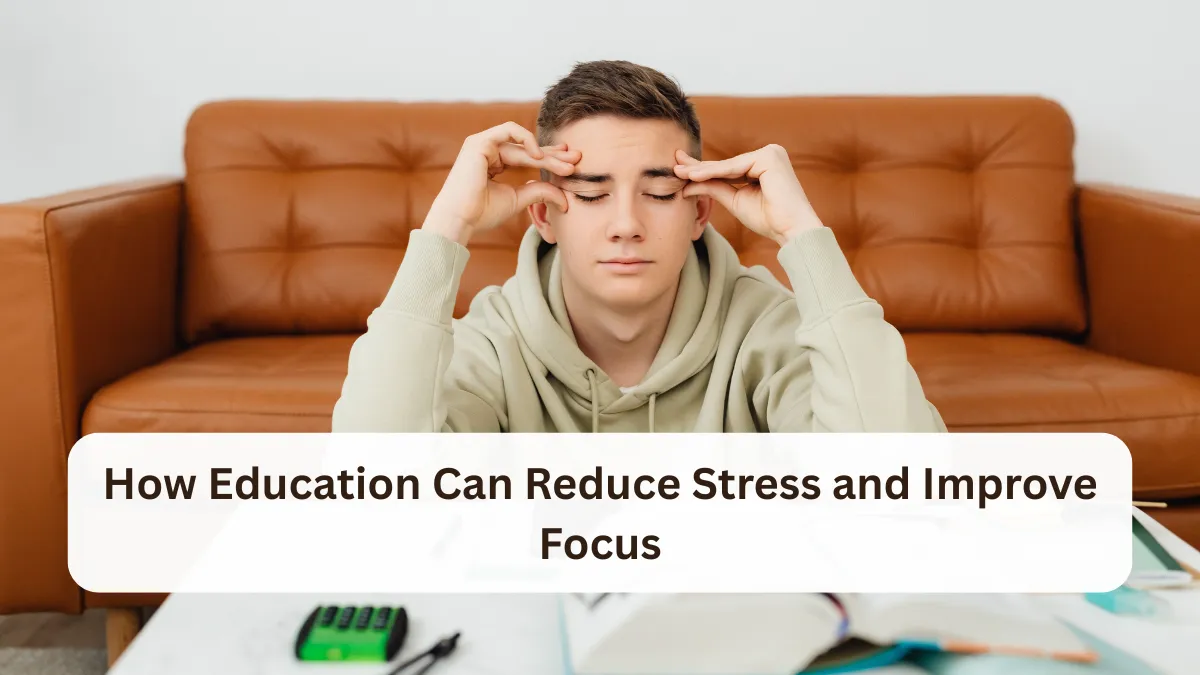
If you live in the United States today, feeling stressed and distracted has almost become normal. Between work, school, family responsibilities, social media, and constant notifications, it can be hard to stay calm and focused on anything for more than a few minutes.
Students worry about grades and loans. Parents juggle jobs and childcare. Professionals try to keep up with skills and deadlines. Even retirees can feel overwhelmed by new technology and information.
 Creating Accessible Learning Pathways for Students with Disabilities
While there are many reasons people feel this way, one powerful tool often gets overlooked: education.
Not just school or college, but learning in a broader sense—understanding how things work, gaining new skills, and having clear information—can lower stress and help you focus better in everyday life.
 The Role of Technology in Making Education Accessible for Everyone
This article explains:
- Why lack of knowledge often leads to stress
- How learning more can actually calm your mind
- Practical ways to use education to improve your focus
- Simple, realistic steps for students, workers, and seniors
All of this is for information only. It is not medical advice or a replacement for professional care.
 Empowering Students Through Accessible and Inclusive Learning Programs
Why Stress and Poor Focus Are So Common
Before talking about solutions, it helps to understand why so many people struggle with stress and focus today.
1. Too Much Information, Not Enough Understanding
We are surrounded by information: emails, texts, social media, news, videos, and online content. But having a lot of information is not the same as understanding it.
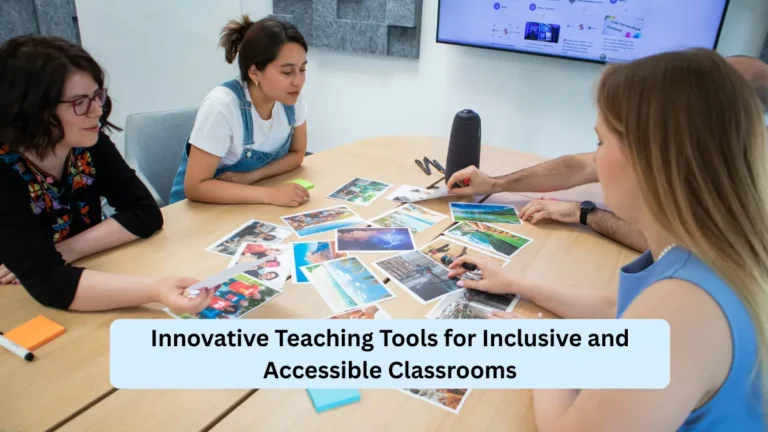
 Innovative Teaching Tools for Inclusive and Accessible Classrooms
When you do not really understand something—like a school topic, a work tool, or a health instruction—it can create:
- Confusion
- Doubt
- Worry about “getting it wrong”
That confusion often turns into stress. Your brain keeps spinning: “What if I mess this up? What am I missing?”
 Accessibility in Education: Bridging the Gap Between Policy and Practice
2. Constant Multitasking
Many people in the U.S. try to do several things at once: reply to messages during meetings, watch videos while studying, or check email while cooking dinner.
This constant switching:
- Makes it harder to focus deeply on anything
- Leaves tasks half-done
- Increases the feeling of “I’m always behind”
That “behind” feeling is a big source of everyday stress.
3. Fear of Falling Behind
Technology and workplaces change quickly. New software, new systems, new expectations. Students may feel pressure to pick the “right” major or career. Older adults may feel anxious about using smartphones, bank apps, or online forms.
When you feel like everyone else “gets it” except you, it can be embarrassing and stressful.
4. Unclear Priorities
Another common issue is not knowing what to focus on first. Your to-do list might be full, but you are not sure which tasks truly matter.
The result:
- You start many things and finish few
- Your mind jumps from one worry to another
- You feel busy but not productive
Understanding why these problems appear makes it easier to see how education can help.
How Education Helps Reduce Stress
Education, in this context, means gaining knowledge and skills that make your life easier to manage. It does not have to mean enrolling in a four-year college. It can be:
- A short online course
- A community education class
- A book or guide
- A workshop at your local library
- Asking an experienced person to show you how something works
Here is how that kind of learning can reduce stress.
1. Knowledge Lowers Uncertainty
Not knowing what you are doing is stressful. For example:
- A first-year college student might feel anxious about writing research papers.
- A new employee might stress over using a company software system.
- A senior might feel overwhelmed by online banking.
When you learn the basics step by step, uncertainty goes down. You move from “I have no idea what I’m doing” to “I understand the process.”
That shift alone can calm your mind.
2. Skills Make Tasks Feel Manageable
Education turns big, scary tasks into smaller, manageable steps.
For example, learning:
- Study techniques makes assignments feel less overwhelming
- Time management makes daily schedules more realistic
- Basic computer skills make online tasks less frustrating
When tasks feel doable, your body and mind relax. You no longer feel like you’re fighting a losing battle.
3. Better Understanding = Fewer Avoidance Habits
Many people avoid tasks that make them feel confused or dumb. That avoidance might look like:
- Procrastinating on an assignment
- Putting off filling out important forms
- Ignoring emails that look “too complicated”
Avoidance often creates more stress later. Education can break this cycle. Once you understand what to do, you are more likely to face the task, finish it, and feel relief.
4. Learning Builds Confidence
Each skill you learn—no matter how small—adds to your sense of capability. When you feel capable, you handle stress better.
Confidence does not mean you never feel stressed. It means you trust yourself enough to say, “This is hard, but I can figure it out or learn what I need.”
How Education Improves Focus
Stress and focus are closely connected. When your mind is stressed, it jumps around. When you feel more confident and informed, it is easier to stay on track.
Education also helps focus in more direct ways.
1. Understanding Increases Interest
It is hard to focus on something that makes no sense. When you understand the “why” behind a task or topic, your brain is more willing to pay attention.
For example:
- A nursing student who understands why a procedure matters is more engaged in learning it.
- A worker who knows how a new software system will save time is more open to using it.
Education deepens understanding, and understanding feeds focus.
2. Learning How to Learn
Many of us were never taught how to study or concentrate. Educational resources that teach:
- Note-taking methods
- Active reading strategies
- Simple memory techniques
can directly improve focus. These are skills, not talents. You can learn them at any age.
3. Structured Learning Trains the Brain
Taking a course, following a class, or even reading a book chapter by chapter trains your brain to stay with one topic over time.
That practice can carry over into other areas:
- Focusing better at work meetings
- Staying present in conversations
- Completing tasks without constant checking of your phone
Step-by-Step: Using Education to Reduce Stress and Improve Focus
Below is a simple process you can follow, whether you are a student, working professional, stay-at-home parent, or retired.
Step 1: Identify Where You Feel the Most Stress
Start by noticing the situations that stress you out the most. Ask yourself:
- When during the day do I feel most overwhelmed?
- What tasks do I avoid because they feel confusing?
- Where do I feel “behind” compared to others?
Common examples:
- A college freshman stressed about taking notes in large lectures
- A new manager overwhelmed by scheduling and planning
- A parent confused by their child’s online school portal
- A senior anxious about paying bills online
Write down one or two areas that bother you the most.
Step 2: Ask, “What Don’t I Understand Yet?”
Next, look at each stress area and ask:
“What exactly feels confusing here?”
For example:
- “I don’t understand how to organize my class notes.”
- “I’m not sure how to use the project management tool at work.”
- “I don’t know the steps for setting up automatic payments.”
This question matters because stress often hides a knowledge gap. Once you see that gap, you can address it directly instead of just feeling anxious.
Step 3: Choose One Skill or Topic to Learn
Pick one specific, small area to focus on first.
Examples:
- “Learn a simple note-taking method for lectures.”
- “Watch a tutorial on the scheduling software we use at work.”
- “Take a basic class on using smartphones at the local library.”
Avoid trying to fix everything at once. Focusing on one skill at a time keeps the process manageable and less stressful.
Step 4: Find a Simple, Reliable Resource
Look for educational resources that match your level and situation. Depending on what you need, you might:
- Search for a free introductory course on a trusted learning platform
- Check your local community college or adult education center
- Visit your public library and ask the librarian for beginner-friendly books
- Ask a coworker, teacher, or family member to walk you through a process
If you are in the U.S., many public libraries offer free digital literacy classes, workshops on budgeting basics, or tech training for seniors and adults.
Choose something that feels clear and not overwhelming. It is okay to start very basic.
Step 5: Set a Small, Realistic Time Block
Instead of saying, “I’ll study for three hours,” try something like:
- “I will spend 20 minutes this evening watching the first lesson.”
- “I will read one chapter of this guide before bed.”
- “I will attend one workshop this Saturday.”
Short, consistent efforts work better for focus and stress than long, intense bursts that leave you exhausted.
Step 6: Apply What You Learn Right Away
Education reduces stress most when it connects to real life.
After learning something, ask:
- “How can I use this today or this week?”
For example:
- Use a new note-taking method in your next class
- Try the time-blocking strategy you just learned to plan your next workday
- Practice one new smartphone skill (like sending photos or using a calendar reminder)
Applying the lesson reinforces your learning and gives you a quick win, which boosts confidence.
Step 7: Reflect on What Feels Different
After a few days or weeks, check in with yourself:
- Does this task feel a little less stressful?
- Can I stay focused on it a bit longer?
- Do I feel more in control, even if I’m still learning?
You do not need a dramatic transformation. Look for small improvements: less dread, fewer mistakes, more clarity.
That feedback helps you see that learning is worth the effort.
Practical Examples for Different Life Stages
Here are some realistic scenarios to show how this can work in everyday American life.
For Students
Problem: A high school or college student in the U.S. feels stressed about exams and cannot focus while studying.
Reason: They never learned how to study effectively and try to memorize everything the night before.
Educational solution:
- Learn one proven study method (for example, summarizing notes in your own words).
- Take a short workshop on test preparation skills, often offered by schools or tutoring centers.
- Learn basic time management: planning study blocks across the week instead of cramming.
Result: Studying feels more organized and slightly less overwhelming. Focus improves because they know what to do when they sit down to work.
For Working Professionals
Problem: An office worker feels stressed by emails, project deadlines, and new software they are expected to use.
Reason: They have no system for managing tasks and only a basic understanding of the tools.
Educational solution:
- Take a short class on productivity or time management (sometimes offered through employers or local community programs).
- Watch beginner-level tutorials on the software tools used at work.
- Learn how to use digital calendars and task lists effectively.
Result: Tasks are clearer, less time is wasted searching for information, and focus improves because they can work through a written plan instead of reacting to every notification.
For Parents
Problem: A parent feels overwhelmed by school communication apps, online portals, and digital assignments.
Reason: They are not comfortable with the platforms and feel embarrassed asking for help.
Educational solution:
- Join a school’s tech-orientation session if available, or ask the school office about any parent training.
- Ask another parent or a school staff member to walk through the portal step by step.
- Use library classes that cover basic computer skills.
Result: With more understanding, they can support their child better and feel less anxious when messages or assignments appear online.
For Seniors
Problem: A retired person feels stressed by digital forms, online appointments, and smartphone notifications.
Reason: They never had the chance to learn digital skills in a structured way.
Educational solution:
- Attend free or low-cost tech-help sessions at senior centers, libraries, or community colleges.
- Learn just one function at a time: texting, video calls, or calendar reminders.
- Use printed guides with large text to review step by step.
Result: Daily tasks that once felt confusing become more manageable, leading to less stress and better focus on the things they actually enjoy.
Helpful Tips and Common Mistakes to Avoid
Helpful Tips
- Start smaller than you think you should. Tiny steps are easier to repeat.
- Choose resources that match your current level, not where you think you “should” be.
- Practice in low-pressure situations before you have to use the skill for something important.
- Be patient with yourself. Learning is a process, not a race.
- Celebrate small wins, like finishing a lesson or successfully using a new skill once.
Common Mistakes
- Trying to fix everything at once and getting more overwhelmed.
- Picking advanced courses because they “sound impressive.”
- Comparing your progress to others, instead of focusing on your own path.
- Giving up when you do not understand something right away, instead of asking for help or trying a different explanation.
- Ignoring free or local resources because they seem “too basic.”
Conclusion
Stress and poor focus are not just personal failures or “lack of willpower.” They often come from real challenges: too much information, unclear expectations, and not enough guidance on how to manage modern life.
Education, in a broad and practical sense, can be a gentle and effective way to feel more in control. When you understand what you are doing and why, tasks feel less frightening. When you learn simple skills for organizing your time and attention, focus becomes easier.
You do not need to change your whole life overnight. You can start with one area that stresses you out, learn one skill, and apply it in one small way. Over time, these small steps can add up to a calmer mind and a clearer sense of direction, no matter your age or background.
FAQ’s
Do I need to go back to school to reduce stress through education?
No. While formal education can help, you do not need to enroll in a degree program. Short courses, workshops, books, online tutorials, and community classes can all provide the kind of learning that reduces stress and improves focus.
How can I find trustworthy educational resources?
You can start with public libraries, local community colleges, adult education centers, and well-known nonprofits. Many of these offer free or low-cost classes. You can also ask teachers, librarians, or HR departments at work to recommend beginner-friendly resources.
What if I feel embarrassed to admit I do not understand something?
It is very common to feel this way, especially as an adult. Remember that everyone has gaps in their knowledge. Asking questions is a sign that you are taking responsibility for your life. Many professionals—teachers, librarians, tech helpers—are used to working with beginners and will not judge you.
How long does it take for education to reduce stress?
There is no set timeline. Some people feel more at ease after a single helpful session because it clears up a major confusion. For others, stress slowly decreases over weeks as they build skills. The key is consistency—small, steady learning over time.
✨ You May Also Like ✨