
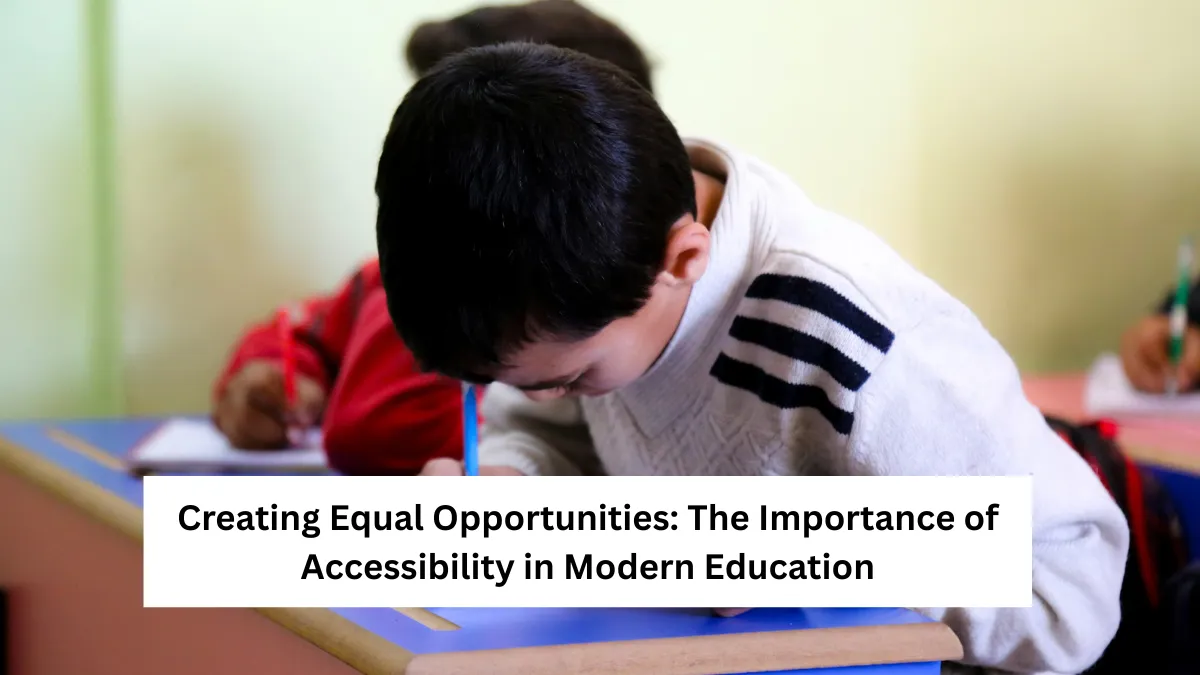
In today’s fast-changing world, education is more than a pathway to success—it is the foundation of equality and progress. Yet, despite global advancements, millions of students still face barriers that prevent them from fully participating in learning opportunities. Accessibility in education is not just a moral issue; it is a crucial factor in ensuring that every learner, regardless of their background, disability, or circumstance, has an equal chance to thrive.
Understanding accessibility means looking beyond ramps and assistive devices—it is about creating inclusive learning environments that empower all students to succeed. This article explores why accessibility matters, how it shapes modern education, and what schools, educators, and policymakers can do to make learning truly inclusive for everyone.

Understanding Educational Accessibility
Accessibility in education means designing learning environments, materials, and technologies that all students can use effectively. It involves removing barriers that hinder participation and engagement, whether physical, digital, or social. For instance, a student with a visual impairment should have access to screen readers and braille materials, while students from low-income backgrounds should have equal access to online learning tools. True accessibility is about proactive inclusion, not reactive accommodation—it anticipates the needs of all learners from the start.
Modern education relies heavily on digital platforms, and this shift brings both opportunities and challenges. While technology can bridge gaps, it can also widen them if not designed inclusively. Educational websites, learning management systems, and digital assessments must adhere to accessibility standards that allow students with disabilities to participate independently. The goal is to create systems where every learner, regardless of ability, can engage without needing special permissions or separate tools.
Why Accessibility Matters in Today’s Classrooms
Accessibility is fundamental to fairness. When some students cannot access information or participate in classroom activities due to physical or digital barriers, they are denied the same learning experience as their peers. This exclusion affects not only academic outcomes but also confidence, motivation, and long-term success. Inclusive education benefits all students—it encourages empathy, collaboration, and diversity of thought, preparing learners for a globalized and interconnected society.
Furthermore, accessibility strengthens educational quality. When teachers design lessons that accommodate different learning styles, they often make content clearer and more engaging for everyone. Captions on videos, for example, help students who are deaf or hard of hearing, but they also aid comprehension for non-native speakers and visual learners. Similarly, using flexible teaching strategies such as Universal Design for Learning (UDL) helps educators reach students with varied strengths and needs.
Legal and Ethical Dimensions of Accessibility
Many countries have enacted laws that require educational institutions to ensure accessibility for students with disabilities. In the United States, the Americans with Disabilities Act (ADA) and Section 504 of the Rehabilitation Act mandate equal access in educational settings. Similarly, the United Nations Convention on the Rights of Persons with Disabilities emphasizes the right to inclusive education for all. These legal frameworks hold institutions accountable for creating environments where barriers are actively removed.
Beyond compliance, there is an ethical responsibility to promote equality. Education is a human right, not a privilege. Ensuring accessibility demonstrates respect for diversity and commitment to social justice. When schools adopt inclusive policies, they send a clear message that every learner is valued. Ethically, it is about treating accessibility not as an obligation but as an integral part of educational excellence.
The Role of Technology in Accessibility
Technology has revolutionized the way students learn, offering new tools to enhance accessibility. Assistive technologies such as text-to-speech software, speech recognition, and adaptive keyboards have made it possible for students with disabilities to participate fully in learning environments. Online platforms with customizable interfaces, color contrast adjustments, and keyboard navigation support enable students to engage independently.
However, technology must be implemented thoughtfully. If educational apps and websites are not designed with accessibility in mind, they can create new forms of exclusion. Schools must prioritize digital inclusivity by following accessibility standards such as the Web Content Accessibility Guidelines (WCAG). Moreover, teachers should receive proper training to integrate accessible technologies effectively into their classrooms. The key is not just to provide tools but to ensure that students know how to use them confidently and efficiently.
Economic and Social Impact of Accessible Education
Accessibility in education has far-reaching economic and social benefits. When students with disabilities or disadvantaged backgrounds gain equal access to education, they can develop the skills needed to contribute meaningfully to society. Inclusive education reduces dependency, increases employment opportunities, and fosters innovation by drawing from diverse perspectives. Economically, it helps nations build stronger, more inclusive workforces capable of meeting the demands of the global economy.
Socially, accessible education strengthens communities by promoting understanding and respect for diversity. Students who learn in inclusive environments grow up to become empathetic citizens who value equity and fairness. In this way, accessibility in education extends beyond classrooms—it shapes the moral and social fabric of societies.
Practical Steps Toward Building Accessible Learning Environments
Creating accessible learning environments requires collaboration among educators, administrators, policymakers, and technology developers. The first step is awareness—schools must recognize the barriers that exist and take proactive measures to eliminate them. Educators should adopt inclusive teaching strategies such as providing multiple ways to access information, engage with content, and demonstrate learning.
Physical environments should be designed for universal access, with clear signage, ramps, and ergonomic furniture that accommodate all students. Digital content must meet accessibility standards, ensuring that all materials—from e-books to online assessments—are usable by everyone. Teacher training is another essential element. Educators need professional development opportunities that equip them to design inclusive lessons and use assistive technologies effectively.
Parents and students should also be involved in shaping accessibility policies. Their firsthand experiences provide valuable insights into what works and what does not. Collaboration with advocacy organizations and disability support services can help schools develop comprehensive accessibility plans that meet diverse needs.
Overcoming Common Barriers
Despite growing awareness, several barriers continue to limit accessibility in education. Limited funding, lack of training, and outdated infrastructure often stand in the way of progress. Many schools still struggle to provide accessible digital platforms or adequate support for students with disabilities. To overcome these challenges, governments and educational institutions must prioritize accessibility in their budgets and strategic plans.
Another barrier is the perception that accessibility benefits only a small group of students. In reality, accessibility improves education for everyone. When materials are clearer, interfaces are intuitive, and environments are inclusive, all learners benefit. Overcoming these misconceptions requires continuous advocacy and evidence-based awareness campaigns that highlight the universal value of inclusion.
The Future of Accessibility in Education
The future of education depends on how well societies embrace inclusion. As artificial intelligence, virtual learning, and adaptive technologies evolve, new opportunities for accessibility will emerge. AI-driven tools can personalize learning experiences, identify challenges early, and offer real-time support for diverse learners. However, these innovations must be guided by ethical design principles that prioritize equity and transparency.
The ultimate vision is a world where accessibility is not an afterthought but an embedded feature of every educational system. When accessibility becomes part of educational culture, students will no longer need to request accommodations—they will already be included from the start. This future demands commitment, innovation, and a shared belief that education should empower every individual, not exclude them.
Conclusion
Accessibility in modern education is not merely a technical requirement—it is a moral, social, and economic imperative. Creating equal opportunities for all learners ensures that society benefits from the full potential of its people. Inclusive education builds stronger communities, more innovative economies, and a more just world.
Every teacher, policymaker, and institution plays a role in making this vision a reality. By prioritizing accessibility, we move closer to an educational system that truly reflects the values of equality, fairness, and opportunity for all.
FAQs
What does accessibility in education mean?
Accessibility means designing learning environments and materials that all students can use effectively.
Why is accessibility important in modern education?
It ensures equal learning opportunities, allowing every student to reach their potential.
How can schools improve accessibility?
Schools can adopt inclusive teaching methods, accessible technology, and universal design.
What role does technology play in accessibility?
Technology provides assistive tools that support students with diverse learning needs.
What is the goal of inclusive education?
Its goal is to eliminate barriers and empower all learners to succeed equally.
✨ You May Also Like ✨