
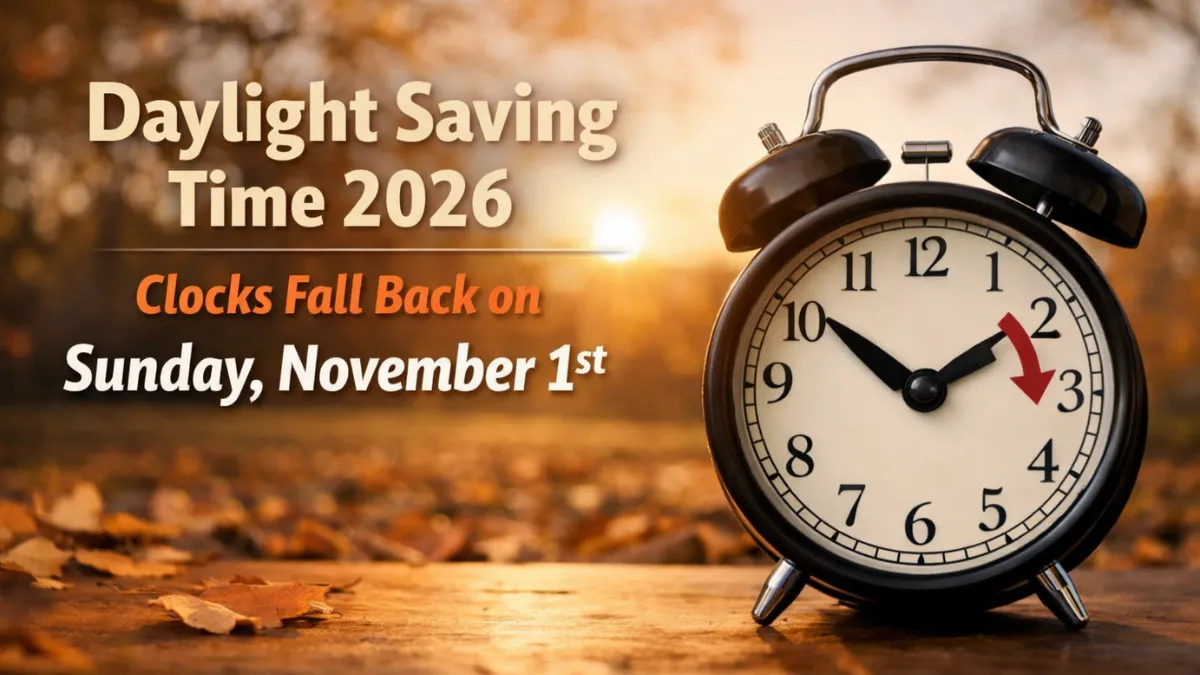
Every year, millions of people across the United States experience that brief moment of confusion when their clocks jump forward or fall back. Whether you love the extra hour of sleep or dread the darker evenings, Daylight Saving Time (DST) continues to affect how we live, work, and sleep. As 2026 approaches, many are already wondering—when exactly do we “fall back” this year?
Let’s break down when the change happens, why we still do it, and what you can do to make the most of the time shift.
 Get $2,000 From IRS in February 2026- Direct Deposit, Eligibility, Payment Dates, and Steps to Receive
When Does Daylight Saving Time End in 2026?
In 2026, Daylight Saving Time officially ends on Sunday, November 1, at 2:00 a.m. That means clocks will be set back one hour to 1:00 a.m. local standard time. In simple terms: you gain an extra hour of sleep that night, but sunset will start arriving earlier in the evening.
Most of the U.S. observes this time change, except for Hawaii, most of Arizona, and several U.S. territories such as Puerto Rico and Guam, which stay on standard time year-round.
 Social Security Benefits Increase in 2026: What Beneficiaries Should Know
Why Do We Still Have Daylight Saving Time?
The idea of shifting the clock forward in spring and backward in fall dates back to the early 20th century. Originally, it was designed to make better use of daylight and conserve energy during the longer days of summer.
While its effectiveness in saving energy is now widely debated, DST remains a long-standing tradition. Many supporters argue it encourages more outdoor activity and aligns work hours with natural daylight. Critics, however, say the constant clock changes disrupt sleep, affect health, and create unnecessary confusion.
 Federal Deposit Holds Add 2026: Why $2000 to $3000 Delays After Identity Reviews
How to Prepare for the Time Change
Even though “falling back” gives you an extra hour of rest, the adjustment can still throw off your internal clock. Here are a few simple ways to make the transition smoother:
- Go to bed earlier – Start shifting your bedtime 15–20 minutes earlier in the week leading up to November 1.
- Get morning sunlight – Exposure to daylight in the morning helps reset your body’s internal rhythm.
- Stick to a routine – Keep consistent sleep and meal times, even after the change.
- Avoid caffeine late in the day – This helps your body adapt faster to the new schedule.
Small adjustments like these can make a big difference in how your body reacts to the shift.
 IRS Today Announced $2,000 Direct Deposit for All – February 2026 New Payment Schedule & Eligibility Guide
What Happens After We “Fall Back”?
After clocks are set back, mornings will be brighter, but evenings will get darker earlier. For many, this marks the start of the “winter blues,” as shorter daylight hours can affect mood and energy.
To combat this, spend time outdoors whenever possible, use good indoor lighting, and try to stay active. Seasonal changes are natural, but your habits can help you maintain a positive rhythm through the darker months.
 Social Security Payment Update: Millions May Qualify in 2026
Will Daylight Saving Time Ever End?
There’s been ongoing debate in the U.S. about ending the biannual clock changes altogether. Some lawmakers and states have proposed staying on permanent daylight saving time to avoid the twice-yearly disruptions.
While the Sunshine Protection Act has made headlines in recent years, it hasn’t yet become federal law. So for now, we’ll continue “springing forward” and “falling back” each year—at least through 2026.
Fun Fact: The Extra Hour of Sleep Isn’t Always Used for Sleep
You might think most people use that extra hour to catch up on rest—but studies show otherwise. Many stay up later, binge-watch shows, or socialize longer. However, experts recommend using that extra hour to rest and recharge; your body will thank you for it later.
Summary
In 2026, Daylight Saving Time ends on Sunday, November 1, when clocks “fall back” one hour. While the change may seem small, it impacts sleep, mood, and even productivity. Preparing your body and maintaining a steady routine can make the transition easier. Until the laws change, this biannual time shift remains part of American life—so mark your calendars, enjoy the extra sleep, and embrace the early sunsets with a cozy mindset.
FAQs
When does Daylight Saving Time end in 2026?
It ends on Sunday, November 1, 2026, at 2:00 a.m. when clocks are set back one hour to 1:00 a.m. local time.
Do all U.S. states observe Daylight Saving Time?
No. Hawaii, most of Arizona, and several U.S. territories like Guam and Puerto Rico do not change clocks.
Why do we still use Daylight Saving Time?
DST was designed to save energy and make better use of daylight, though its modern effectiveness is debated.
How can I adjust to the time change easily?
Go to bed earlier, get morning sunlight, and maintain consistent sleep and meal schedules to adapt smoothly.
Will the U.S. ever stop changing the clocks?
Possibly. The Sunshine Protection Act aims to make DST permanent, but as of now, it’s not yet federal law.
✨ You May Also Like ✨