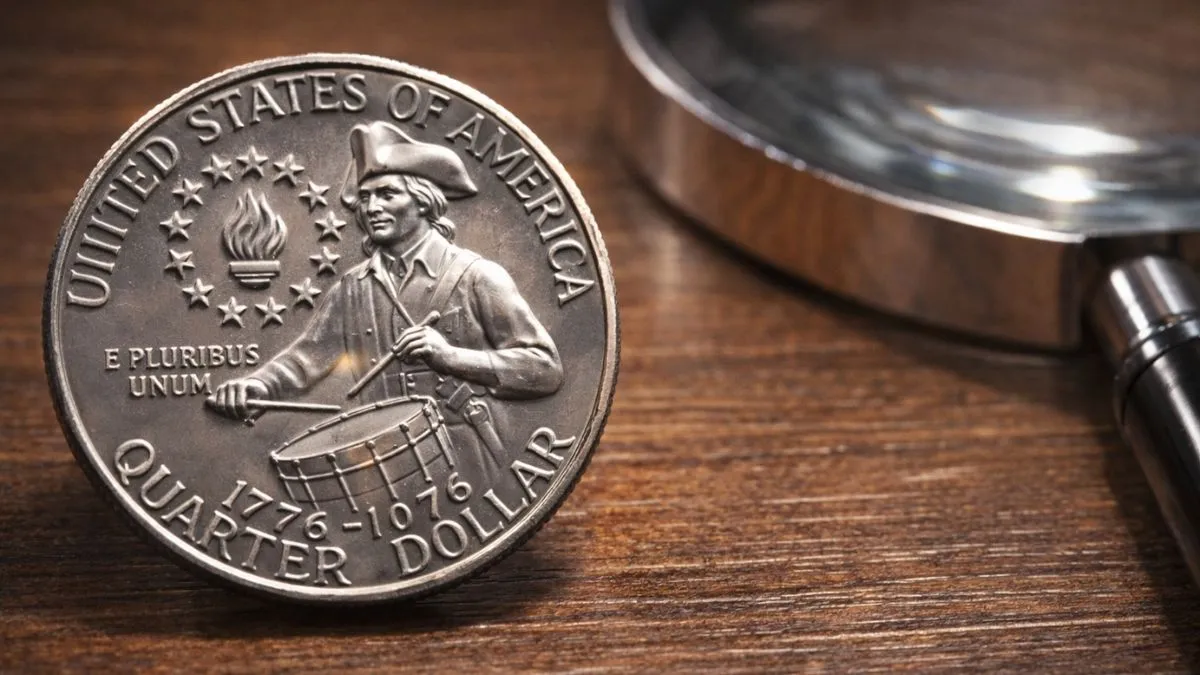
For millions of Americans, the 1776–1976 Bicentennial quarter is a familiar sight — a common coin commemorating the 200th anniversary of the United States.
But beneath its everyday appearance lies a surprising story of artistry, history, and, in rare cases, serious value. In 2026, as vintage coins draw fresh interest from collectors and history buffs alike, this iconic quarter is worth a second look, literally and figuratively.
 Get $2,000 From IRS in February 2026- Direct Deposit, Eligibility, Payment Dates, and Steps to Receive
Why This Quarter Matters More Today
The Bicentennial quarter represents a moment in American history when the U.S. Mint paused standard designs and issued a special coinage to celebrate independence.
Its reverse — a colonial drummer boy — is instantly recognizable and remains beloved by generations who grew up in the 1970s and beyond. But as collectors pursue overlooked treasures with new tools and community marketplaces, some of these quarters have been selling for far more than 25 cents.
 Social Security Benefits Increase in 2026: What Beneficiaries Should Know
Most examples in everyday circulation — including those you might find in a piggy bank — still trade at face value. But certain varieties and mistakes can command significant premiums, turning pocket change into a small windfall.
A Quick History of the Bicentennial Quarter
In 1976 the U.S. Mint produced a special “dual-date” quarter: “1776–1976” — unlike the usual single year date. These coins were struck at three facilities:
 Federal Deposit Holds Add 2026: Why $2000 to $3000 Delays After Identity Reviews
- Philadelphia (no mint mark) — the most common
- Denver (“D” mint mark) — also common
- San Francisco (“S” mint mark) — especially coveted proof and silver issues
The San Francisco strikes include business-strike 40 % silver coins and proof versions intended for collectors. Most circulated pieces are copper-nickel clad, but the silver ones — especially in uncirculated or proof condition — hold tangible value for collectors.
What Makes Certain Quarters Valuable
1. Silver Content and Proof Issues
The San Francisco mint produced a limited number of 40 % silver business strikes and proof quarters. These silver versions weigh more and look distinctly different from their clad counterparts. While circulated silver quarters may sell for modest premiums, pristine proof or high-grade examples can fetch hundreds or even thousands of dollars at auction.
 IRS Today Announced $2,000 Direct Deposit for All – February 2026 New Payment Schedule & Eligibility Guide
2. Exceptional Mint State Grades
Coins graded at MS67 or MS68 by professional grading services like PCGS or NGC are rare. Mint State (MS) grades reflect coins that have never been circulated, showing sharp details and minimal wear. High-grade Denver or Philadelphia Bicentennial quarters can trade well above typical values — sometimes into the four figures — simply because such quality is scarce.
3. Minting Errors
Errors occur when something goes wrong during striking: the planchet shifts, the die misaligns, or an incorrect metal blank is used. These anomalies are what collectors really hunt for:
 Social Security Payment Update: Millions May Qualify in 2026
- Doubled Die Obverse (DDO): Visible doubling on inscriptions such as “LIBERTY” or “1776–1976.” Dramatic examples have sold for thousands.
- Off-Center Strikes: Portions of the design missing or shifted; values rise with the degree of misalignment.
- Wrong Planchet Strikes: Coins struck on the wrong metal blank (for example, a silver quarter struck on a clad planchet or vice versa) are extremely rare and prized.
- Clipped Planchets / Die Breaks: Less dramatic errors but still collectible.
How to Spot a Potential Treasure
Start with tools you already have or inexpensive ones you can easily buy:
- Magnification: A simple loupe or smartphone macro lens can reveal doubled letters or misaligned designs.
- Weight and Sound: Silver coins have a distinctive heft and a higher-pitched ring when gently tapped compared to copper-nickel clad coins.
- Mint Mark Check: An “S” under the motto usually means proof or silver — a key identifier for more desirable varieties.
If you think you’ve found something special, consider having it graded by a reputable service. Certification lends credibility and significantly affects market value.
What It’s Not
Despite sensational online claims, most Bicentennial quarters are not worth fortunes. The vast majority remain common and trade near face value. Be wary of listings promising huge returns without credible verification or grading.
A Coin That Bridges Generations
The 1776–1976 Bicentennial quarter is more than pocket change. It’s a miniature piece of history — and for some collectors, it’s a gateway into the wider world of numismatics. Whether you find a rare error or simply appreciate the design and story, this coin is a reminder that even everyday objects can hold unexpected significance.
Takeaway
Before spending that old quarter, take a moment to look at it closely. With the right combination of mint mark, condition, and the rare error, you might just be holding more than small change — you could be holding a piece of history worth pursuing.
✨ You May Also Like ✨